
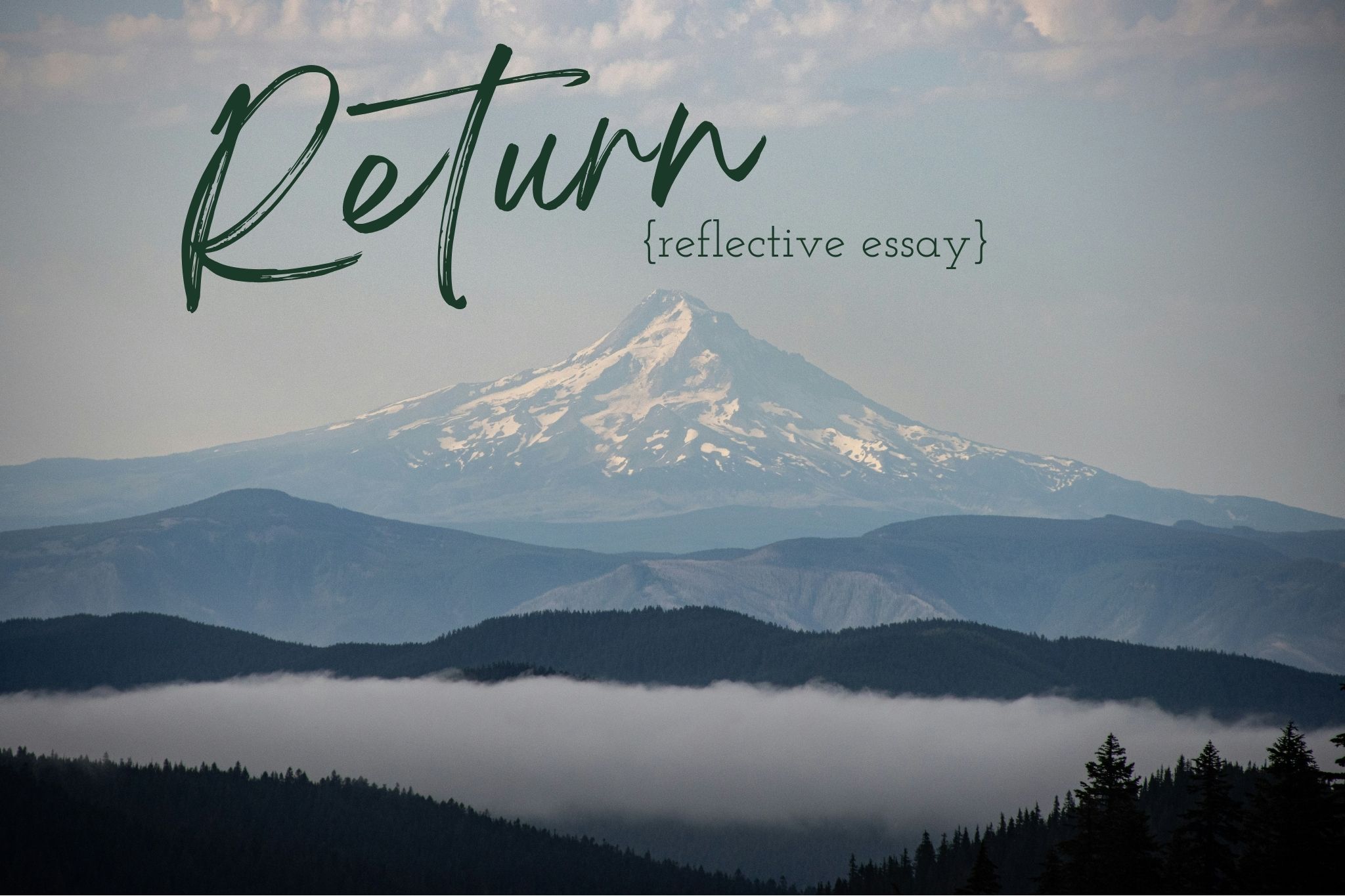
I wrote this essay for a scholarship competition and wanted to share it here! The topic is a special one for me, especially since I recently saw Mt. Hood and Mt. St. Helens in the distance on a recent trip to Oregon.
. . .
I first opened a copy of Heidi by Johanna Spyri as a child. Although the colorful flowers on the cover originally pulled me into the story, Spyri’s vivid descriptions were what made me continue reading. The beautiful words transported me to the Swiss Alps. Alongside the young heroine Heidi, I could rejoice at the thought of seeing the sun fade into the mountains before hearing the sound of the pine needles rustling on a windy night. Growing up in Southern California, I had grown far more familiar with the sounds of traffic rushing down the highway or waves crashing on the shore, but reading this book made the mountains sound like the most wonderful place to escape.
Besides these memorable images of the Alps, another aspect of this book reached a deeper part of my heart: the emphasis on prayer. At this young age, I had already begun wrestling with the reality that not all our prayers are answered in the ways that we once hoped. All those nights I had spent praying with my family at my bedside had brought me to a point of wondering how my prayers could ever fit into God’s plan.
When I read one of Heidi’s conversations with her friend Clara, the purpose for prayer made perfect sense. Like Clara, I had wondered, “perhaps we ought not to pray for anything, because God knows—as we don’t—what is best for us” (p. 272). And like Clara, I also needed to hear Heidi’s wise response: “We ought to pray to Him every day to show our trust, and that we know that everything comes from God” (p. 272). Prayer is my way of showing God that I trust Him, I suddenly realized. That one conversation has remained in my memory since I first read it.
But later in my life, at the end of eighth grade, I went through a phase of emptiness. Life’s distractions caused me to pray less and less. Soon, I began trusting God less and less. I depended less on God and more on my own strength. For satisfaction, I turned to my achievements, both academic and athletic. My sports, running and swimming, turned into an obsession, and I developed training habits that matched. Although I did not realize it then, my overtraining caused me to develop iron-deficiency anemia and RED-S (Relative Energy Deficiency in Sport), a medical condition in athletes who underfuel. In a matter of months, I went from being able to run ten miles to struggling to run even one. At this point, I reached a rock-bottom state in which I struggled to accept my self-worth without any recent athletic successes.
I had turned to success as the wrong source of satisfaction. Isaiah 55:2 became a convicting question for my life:
“Why do you spend your money for that which is not bread, and your labor for that which does not satisfy? Listen diligently to me, and eat what is good, and delight yourselves in rich food.”
~ Isaiah 55:2, ESV
My health issues taught me to be more conscious about fueling my body with enough food. On a spiritual level, they also reminded me to return to God as my source of daily bread, the only bread which can truly satisfy.
Looking back, I needed to go through this hard trial, since I needed something to bring me to my knees. After recently returning to the book Heidi, a conversation that Heidi had with Clara’s wise Grandmamma applied perfectly to my life yet again. Like the young Heidi, my eighth-grade self needed to hear this reminder:
“[God] has been watching you all this time—never doubt that—but you have stopped praying, and that showed you did not really believe in Him. If you go on like that, God will let you go your own way. Then if things go wrong and you complain that there’s no one to help you, you will really have only yourself to blame, because you will have turned your back on the one Person who could really help you.”
~ Heidi, p. 131
I remember one moment in eighth grade that I had finally returned to my knees, but I found myself blaming God. In my frustration, I blamed my loving Creator for a health problem that I had brought entirely upon myself, for I had gone my own way.
Going my own way took me down a difficult path that ultimately led me back to God. I returned to Him the following summer, when I went to a Christian summer camp in the mountains of Idyllwild. Like how Heidi says that the sunsets are “the sun’s way of saying goodnight to the mountains” (p. 340), I saw the mountain sunrises as God’s way of saying good morning. Seeing the pink and orange watercolors behind the pine trees every morning was a reminder that God had been faithful on every morning of my life.
I still remember one moment that I was walking back to my cabin at night. When I looked up at the stars, shining so brightly without the familiar city lights to wash them out, the sight filled my heart with God’s joy. I felt like Clara from one scene in Heidi, looking at the night sky in the mountains for the first time and smiling “because [the stars] are up in heaven and know that God looks after us all on earth so that we oughtn’t really ever to be afraid, because everything is bound to come right in the end” (p. 249).
Now, I truly see that God made everything right in the end. After all the times that I wondered why my prayers had not been answered in the way that I hoped, I now see that God worked out His perfect plan. The wise Grandmamma in Heidi also points out, “If we ask for something it isn’t right for us to have, [God] won’t give it to us, but in His own good time, if we go on praying and trust in Him, He’ll find us something better” (p. 130). In experiencing the pain that happens when I choose to go my own way, I see that God’s way is better than my own, just as He promises in Isaiah 55:8:
“For my thoughts are not your thoughts, neither are your ways my ways, declares the Lord. For as the heavens are higher than the earth, so are my ways higher than your ways and my thoughts than your thoughts.”
~ Isaiah 55:8, ESV
Perhaps I saw this the most clearly during the summer of eighth grade, on the day that I found out that my iron-deficiency anemia was gone. That day, my cross-country teammates led me up a local mountain. After running all the way to the top, I felt closer to heaven when I saw my neighborhood stretched out beneath the fog.
Had I not lost my running abilities due to those health struggles, I would have never felt this much joy at running to the top of a mountain. Had it not been for this valley in my life, I would have never experienced the relief of finally reaching the mountaintop.
Now, every time that I return to the mountains, whether by going to that Christian camp again each summer or during family vacations to Colorado or Montana, I have an experience much like that when “Heidi looked around with growing delight at the mountain peaks she knew so well which seemed to greet her like old friends” (p. 174). The familiar beauty of the mountains brings me right back to the experience of drawing closer to God.
Although I love my home city, there are days that I want to return to those mountaintops, where the sky seems closer and God feels nearer. When Heidi spent time in the city of Frankfurt, she felt a similar longing to return to the mountains. I now compare this longing to the human desire for the perfection of heaven. Perhaps mountains are the closest we can get to touching heaven here on earth. After all, according to the prophet Isaiah, “the mountain of the house of the Lord shall be established as the highest of the mountains” (Isaiah 2:2).
The connection between mountains and heaven not only appeared in my re-reading of Heidi, but also in my current reading of C.S. Lewis’s Till We Have Faces. I came across this quote from the dying character Psyche at the perfect time:
“The sweetest thing in all my life has been the longing—to reach the mountain… For indeed [going to the mountain] now feels not like going, but going back. All my life the god of the Mountain has been wooing me.”
~ Till We Have Faces, PP. 86-88
This character’s words remind me of what my church’s late pastor, Ray Bentley, said on his deathbed: that he could see Jesus on the mountain, calling him to return home.
Every time I run around my neighborhood, I see the local mountain rising above the suburbs. I see this mountain, a physical representation of how God faithfully led me through one of life’s trials and back to Him, and I remember that moment of standing at its peak. It brings me hope, knowing that one day I will meet God on His holy mountain and rejoice at returning to His presence, as promised in Isaiah 55:12:
“For you shall go out in joy and be led forth in peace, the mountains and the hills before you shall break forth into singing, and all the trees of the field shall clap their hands.”
~ Isaiah 55:12, ESV
6 thoughts on “Returning to the Mountains and Returning to God”
Another great post! Praying for your next moves with college coming up in the fall.
Thank you so much, Ian!
Thank you so much for sharing with us, Alannah! The verse from Isaiah reminded me of Psalm 12:2 that has convicted me in the past: “In vain you rise early and stay up late, toiling for food to eat. For He grants sleep to those He loves.” And I think I’ll have to go reread Heidi, because there’s a lot of this that I missed my first time reading!
Aww you’re welcome, Signe! And thanks for sharing that verse. Yes, I definitely recommend rereading it. There were so many Christian messages that I missed my first time reading it when I was much younger.
This was so beautifully written. I love how you wove the various novels and verses into the essay.
Thanks so much!